
Off-ratio spray foam problems, explained.
When spray polyurethane foam is applied off-ratio, it doesn't cure the way it's supposed to — texture, odor, shrinkage, and cracking are the signs. Learn what to look for, what causes it, and how to get a professional evaluation.
Does your foam show any of these?
- Soft, spongy, or crumbly texture
- Strong odor that hasn't faded after a few days
- Shrinkage, gaps, or cracking near framing
Spray foam that looks fine on day one can still be off-ratio.
Spray polyurethane foam is a precise two-part chemical system. When the A-side and B-side aren't combined at the correct ratio during application — usually from proportioner miscalibration, temperature outside the working range, or applicator error — the foam doesn't cure the way it's designed to.
This is different from overspray, which is foam landing on a surface it shouldn't during a normal application. Off-ratio foam is a defect inside the material itself, in the correct location, from bad chemistry or application.
Recognizing it early — through texture, odor, and appearance — is the first step toward an honest remediation plan.
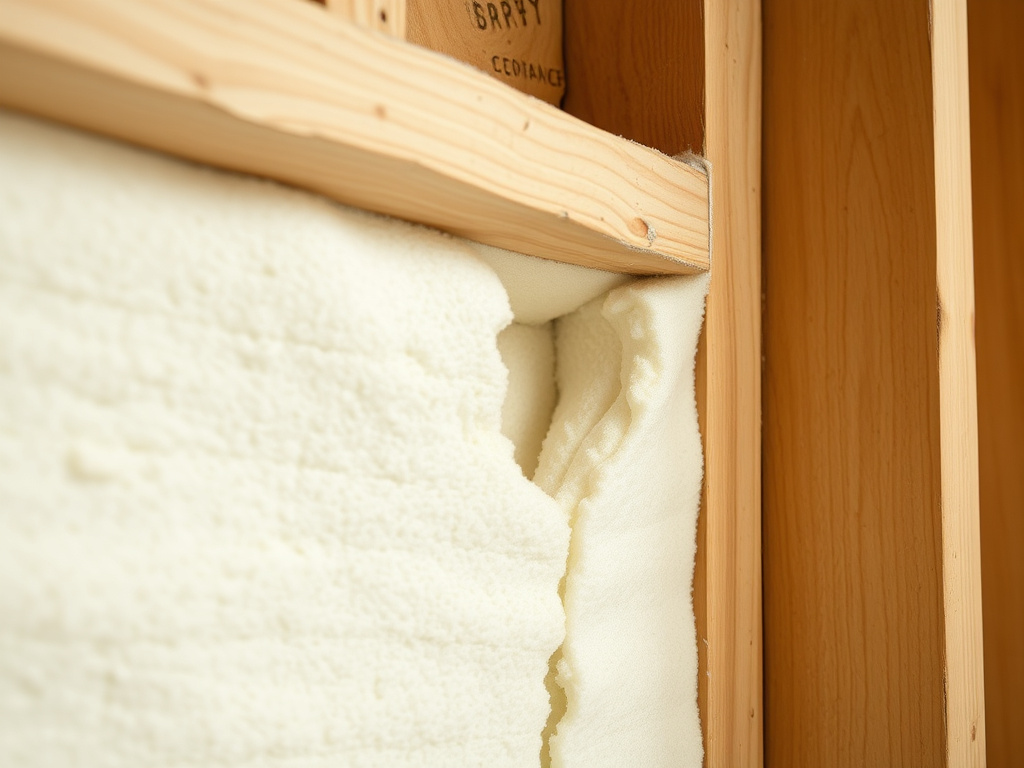
Signs your spray foam may be off-ratio
Any one of these is worth a closer look. Two or more together, in the same spot, is a stronger case for a professional evaluation.
Soft, spongy, or crumbly texture
Presses in and stays dented, or crumbles instead of springing back.
Persistent chemical or fishy odor
Strong smell that hasn't faded days after installation should have finished off-gassing.
Shrinkage or cracking
Gaps opening between the foam and framing, or cracks across the surface.
Discoloration
Yellowish, patchy, or unusually dark sections compared to the rest of the application.
Incomplete rise or expansion
Foam that's noticeably thinner than it should be in a given cavity.
Never fully cures
Surface stays tacky or wet-feeling long after it should have set up solid.
From noticing a problem to a clear evaluation
Self-check
Use our symptom checklist to see whether what you're noticing lines up with off-ratio signs.
Request evaluation
Tell us what you're seeing — texture, odor, location — and we'll help you understand next steps.
Professional assessment
An on-site look, and independent air-quality testing where warranted, before any work is scoped.
Remediation plan
A clear plan based on what's actually found — spot removal, full removal, or encapsulation of sound material.
 Root Cause
Off-ratio foam traces back to a handful of well-understood causes.
Proportioner miscalibration, chemical or substrate temperature outside the working range, humidity, expired or mismatched chemical lots, and applicator technique are the leading factors — often in combination, and often localized to a specific pass or section rather than an entire job.
- Proportioner miscalibration or worn pumps
- Chemical temperature outside working range
- Humidity or a damp substrate
- Applicator technique and experience
Off-ratio spray foam FAQs
It means the two-part chemical system used in spray polyurethane foam (SPF) — the A-side and B-side — wasn't combined at the correct ratio during application, so the foam didn't cure the way it was designed to. It's a chemistry defect inside the foam, not foam landing on the wrong surface.
Overspray is foam that ends up somewhere it shouldn't during a normal, correctly-mixed application — on a window, a vent, or a piece of trim. Off-ratio foam is a defect in the material itself, from incorrect mixing or curing, even in the correct location.
Soft, spongy, or crumbly texture; a strong chemical or fishy odor that doesn't fade within a few days; shrinkage or cracking; discoloration; foam that never fully expanded; and foam that stays tacky instead of curing solid.
Off-ratio foam can continue releasing unreacted compounds after it should have stopped, which is worth taking seriously — but the right response is a professional evaluation and, if warranted, air-quality testing, not alarm. We cover this in a factual, calibrated way on our health and safety page.
Generally no. Unreacted chemistry trapped in off-ratio foam doesn't resolve by sealing or coating over it. Mechanical removal is the standard remediation approach; encapsulation has a narrower role, mainly for residual odor on foam that's otherwise sound.
Most commonly: proportioner miscalibration, chemical or substrate temperature outside the working range, humidity, expired or mismatched chemical lots, or applicator technique and experience.
Request a professional off-ratio foam evaluation
Tell us what you're seeing — texture, odor, shrinkage, or a spot that never fully cured — and we'll put together a clear, no-pressure evaluation referral for your property.